Yields are at levels not seen in a generation and everyone treats bonds as the obvious short. My view is that now is the time to start building a long duration position. The trade is long duration. TLT is the straightforward route, with long SOFR Dec 2028 alongside it.
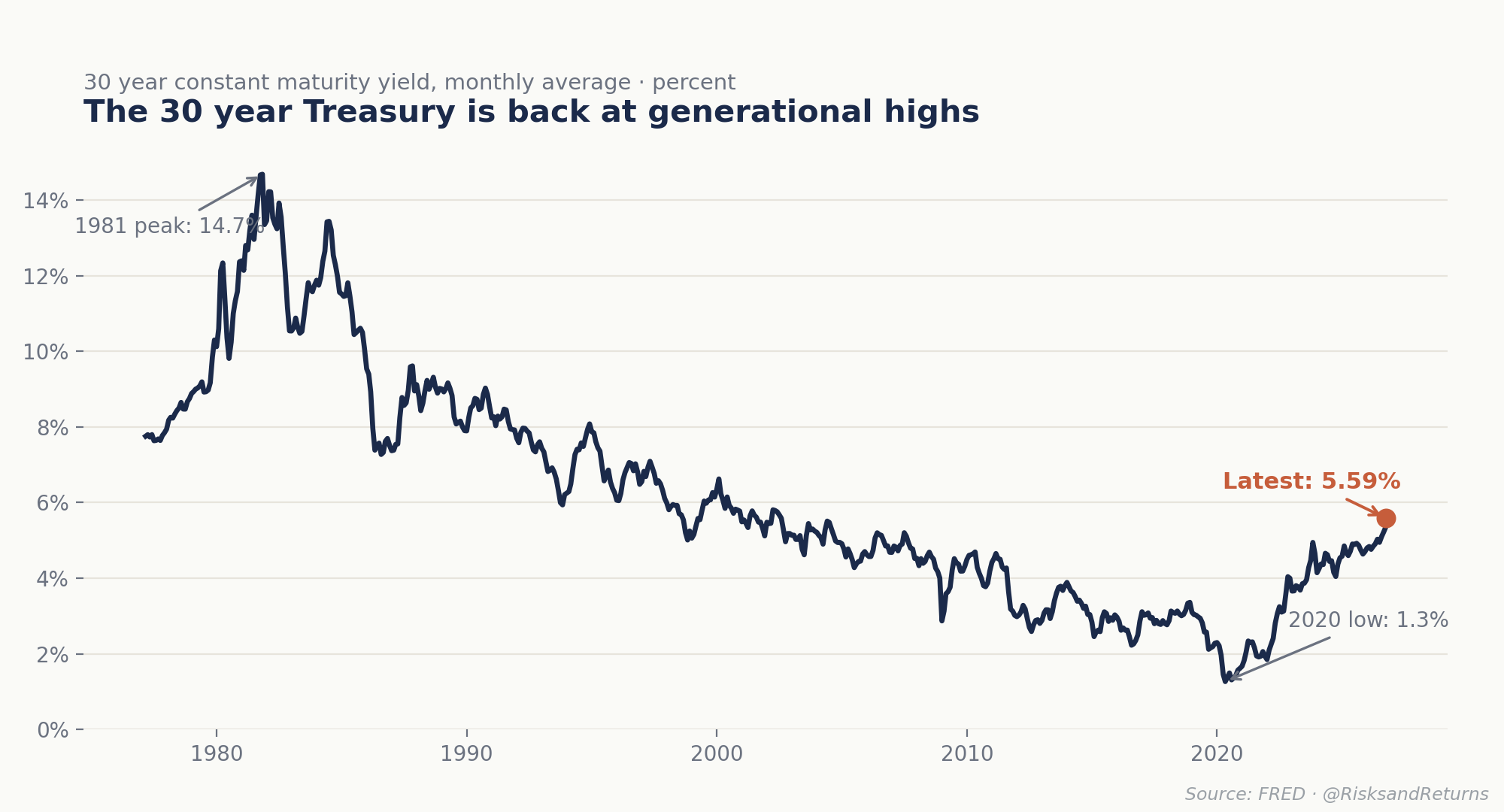
Start with what everyone already knows. The bear case is fully priced in: deficits, tariffs, deglobalization, a fat term premium, and no foreign government bid. It is the bullish case that never makes headlines. That is where the edge is.
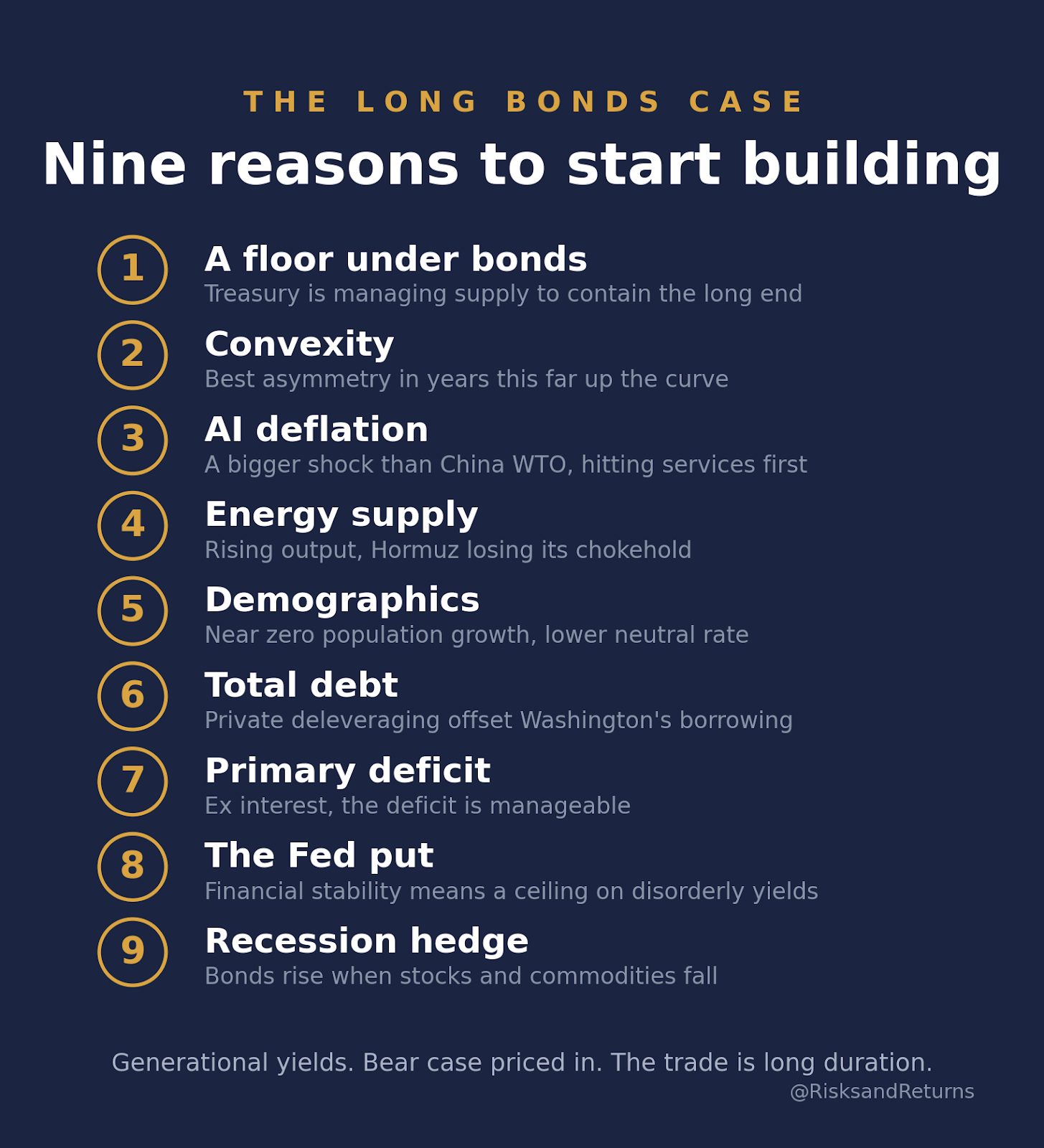
One: a floor under bonds. The Treasury Secretary is actively managing supply to keep long end issuance contained. Fiscal leadership leaning against a bond selloff is new. It changes the market for bonds.
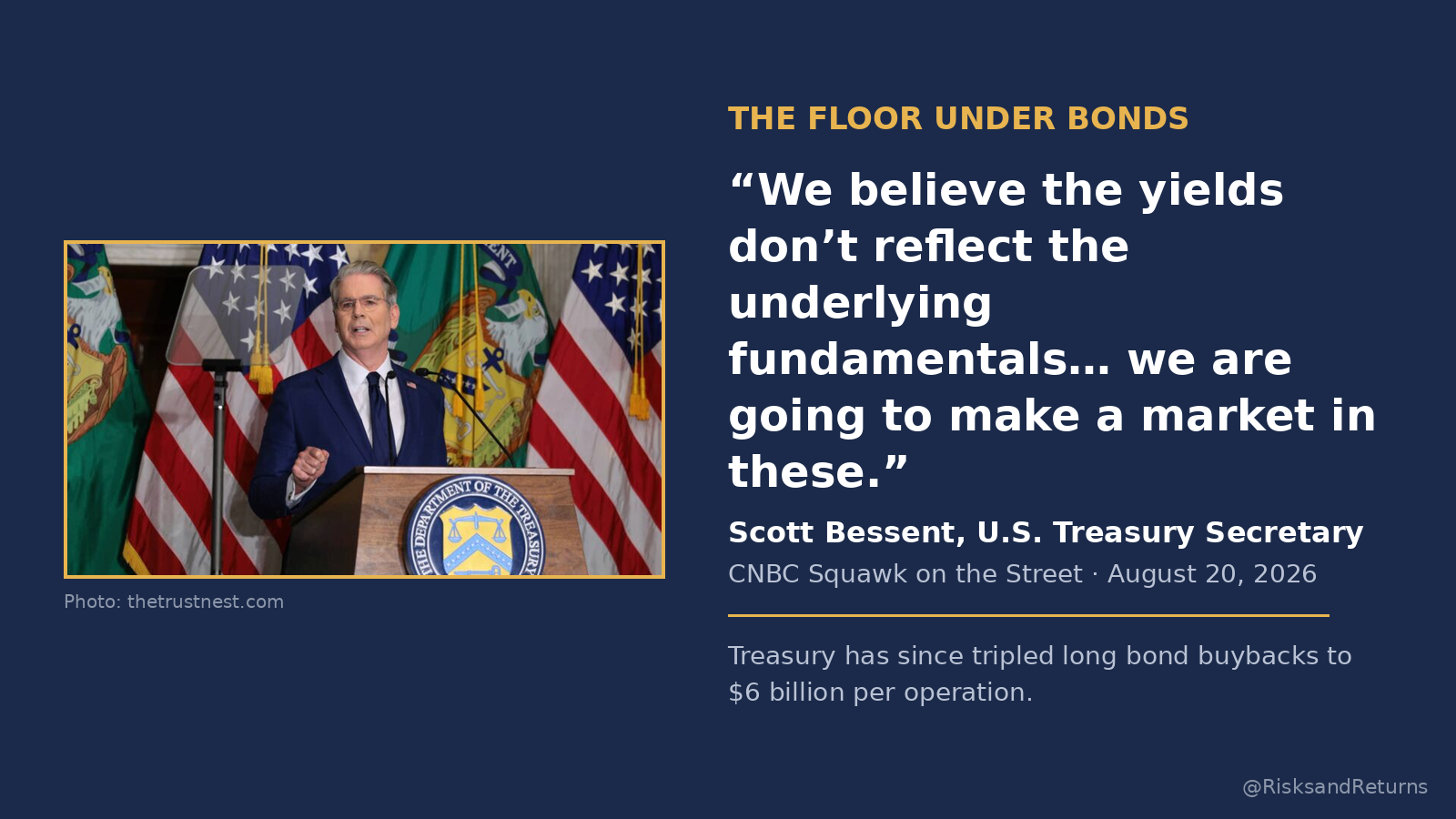
Photo: thetrustnest.com
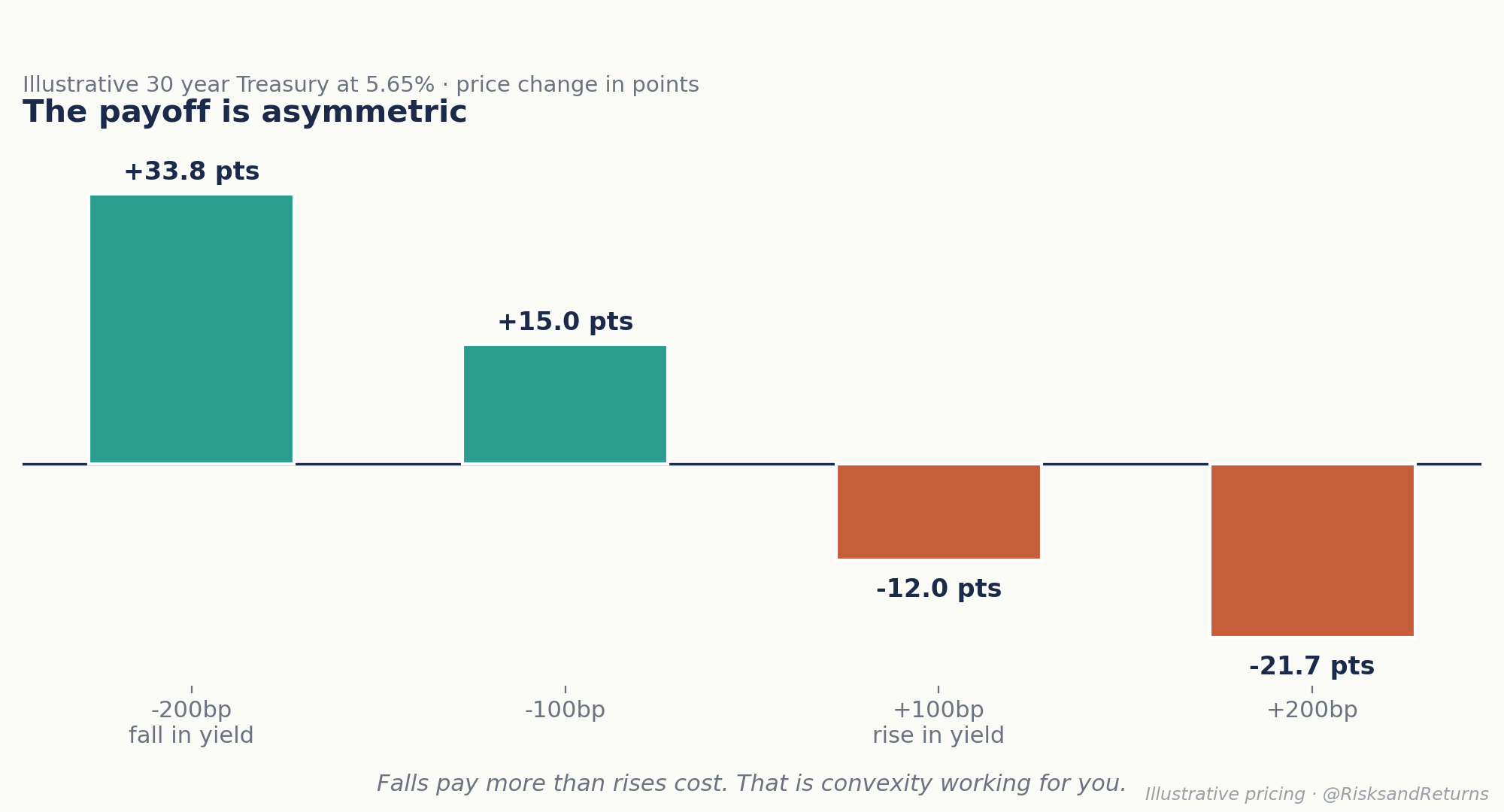
Two: convexity. With the 30 year near 5.65%, a 100bp fall in yield adds about 15 points of price while a 100bp rise costs only about 12. That asymmetry is the best it has been in years.
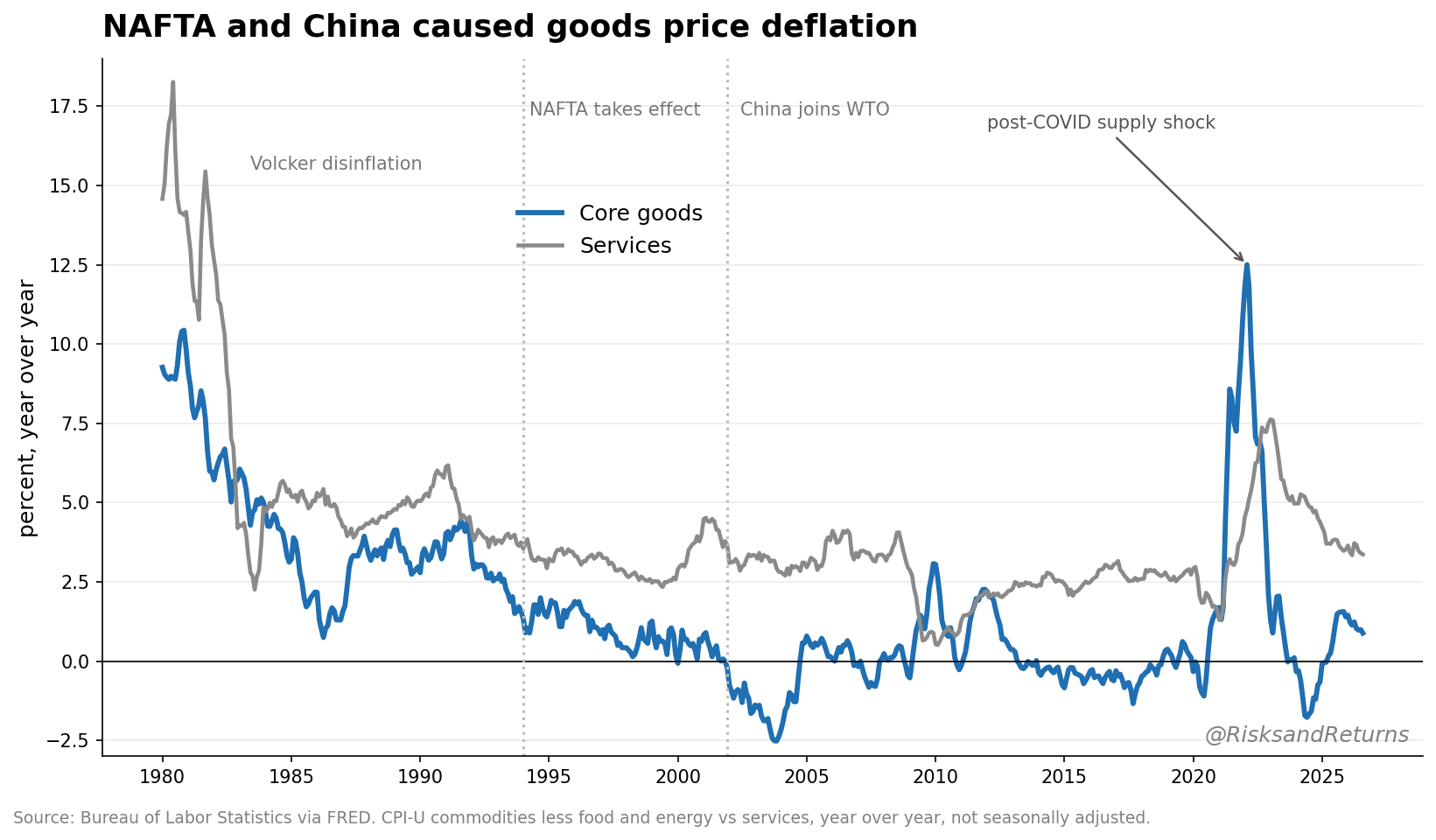
Three: AI is the largest deflationary shock since globalization. NAFTA and China squeezed goods prices for decades. AI is squeezing the cost of knowledge itself, which means services prices fall next.
White collar work is already showing it. BLS payroll data has AI exposed jobs flat to down for two years. Only blue collar construction on the AI buildout is holding up total employment. When the buildout ends, that prop fades and the shedding of knowledge work becomes the story of the labor market.
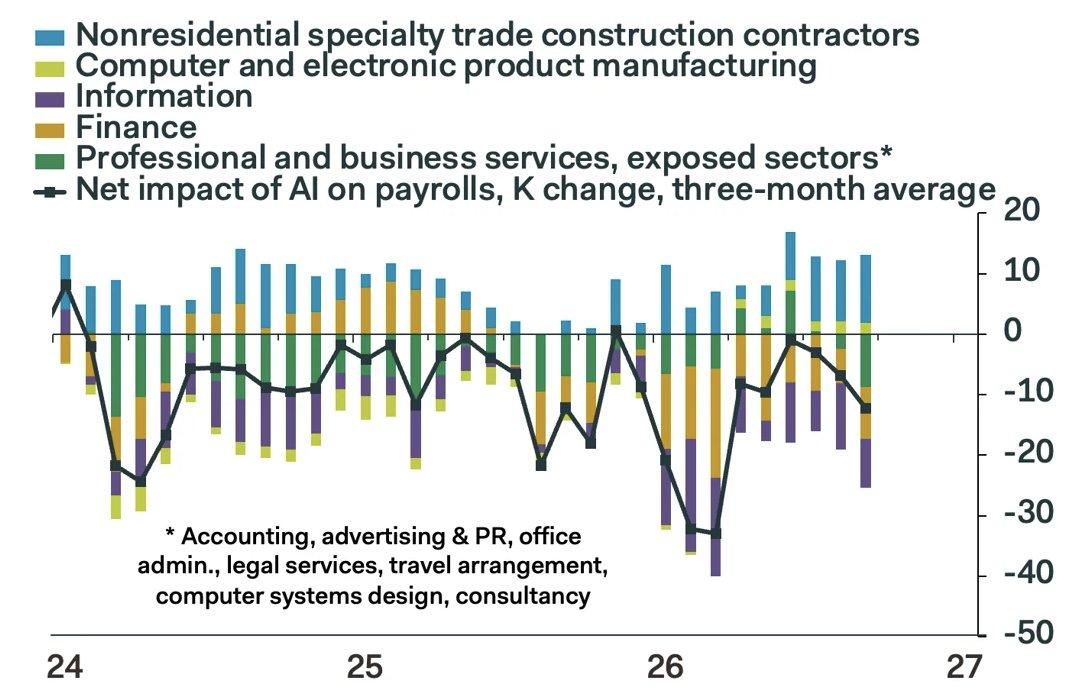
Chart: Pantheon Macroeconomics (@samueltombs)
And that is only the first wave. In a few years robotics does to goods what AI is doing to services. The robot buildout has already started in China. Falling prices across both halves of the economy means inflation is headed down.
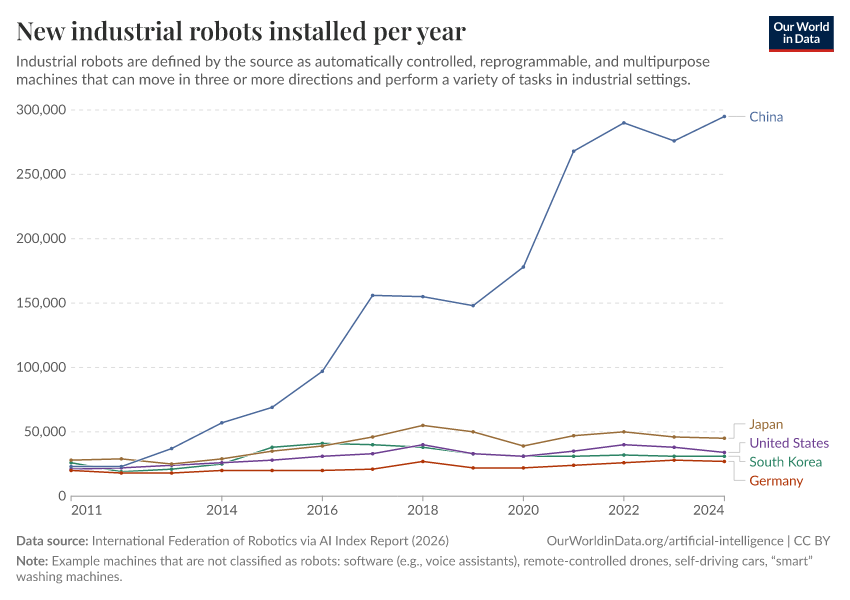
Chart: Our World in Data, data from International Federation of Robotics
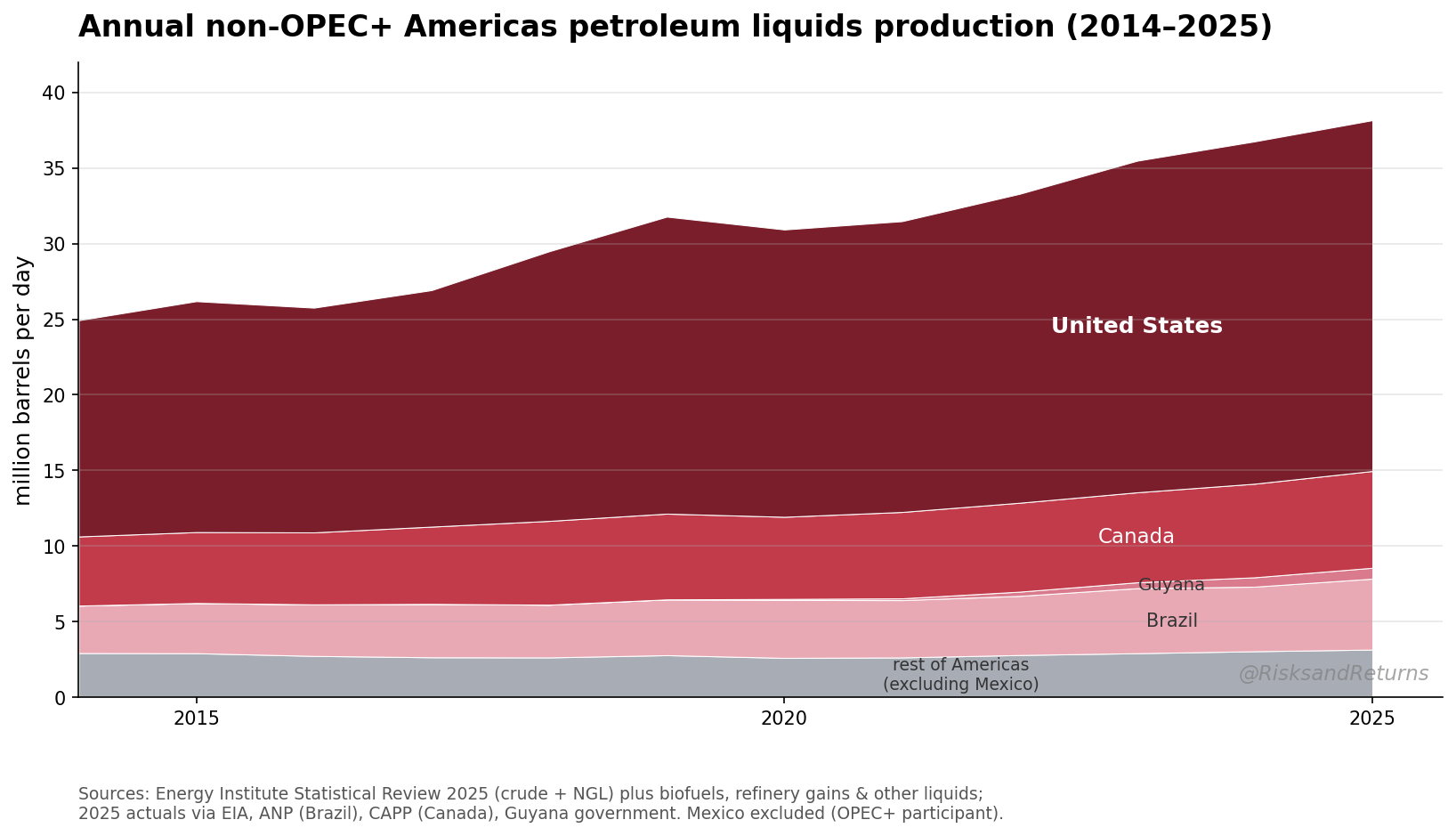
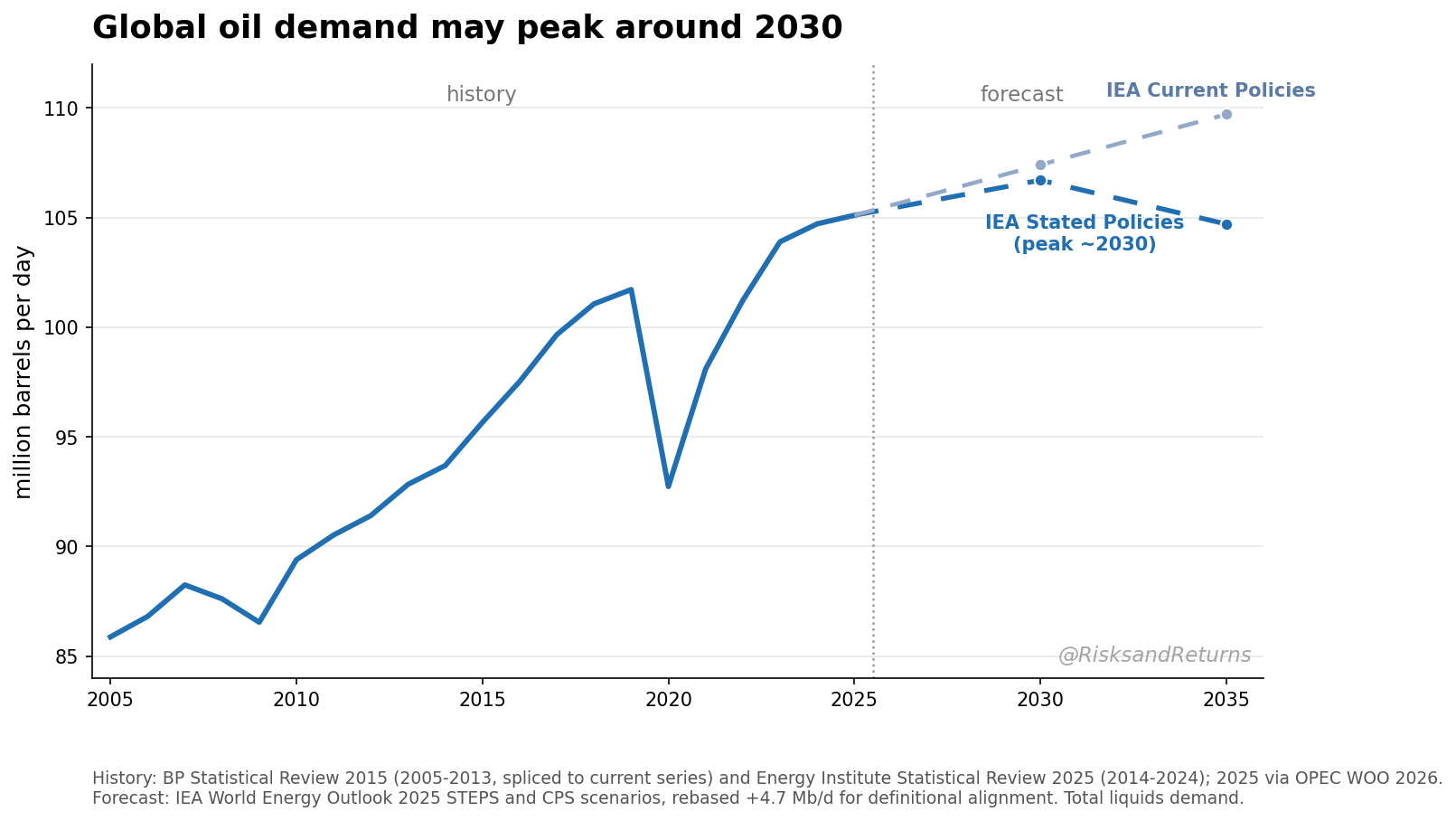
Four: energy. Global supply keeps rising with new sources coming online around the world, and the Strait of Hormuz matters less as alternative routes get built. Oil demand likely plateaus soon.
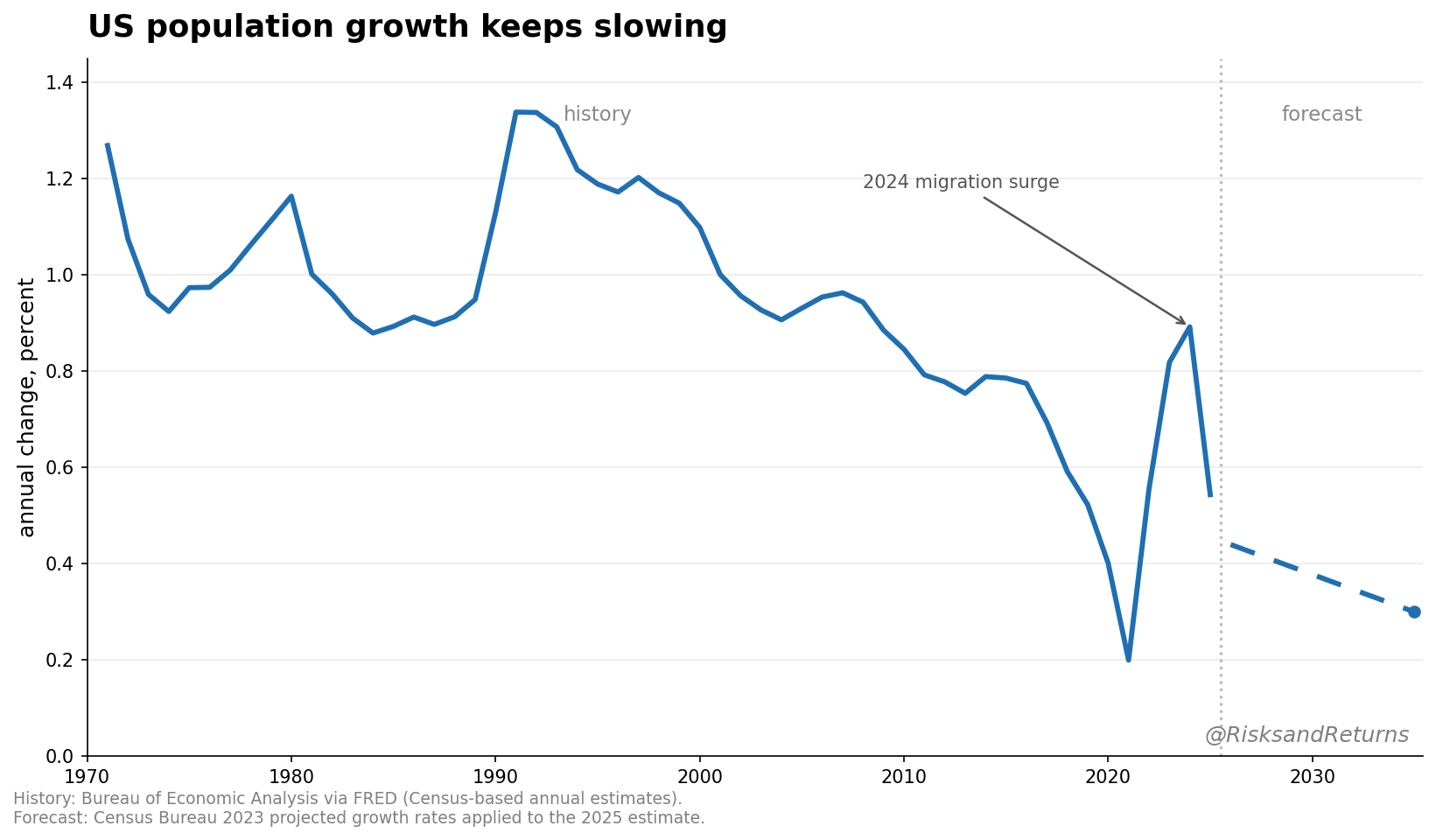
Five: demographics. US population growth is near zero. That means structurally lower potential growth and a structurally lower neutral rate.
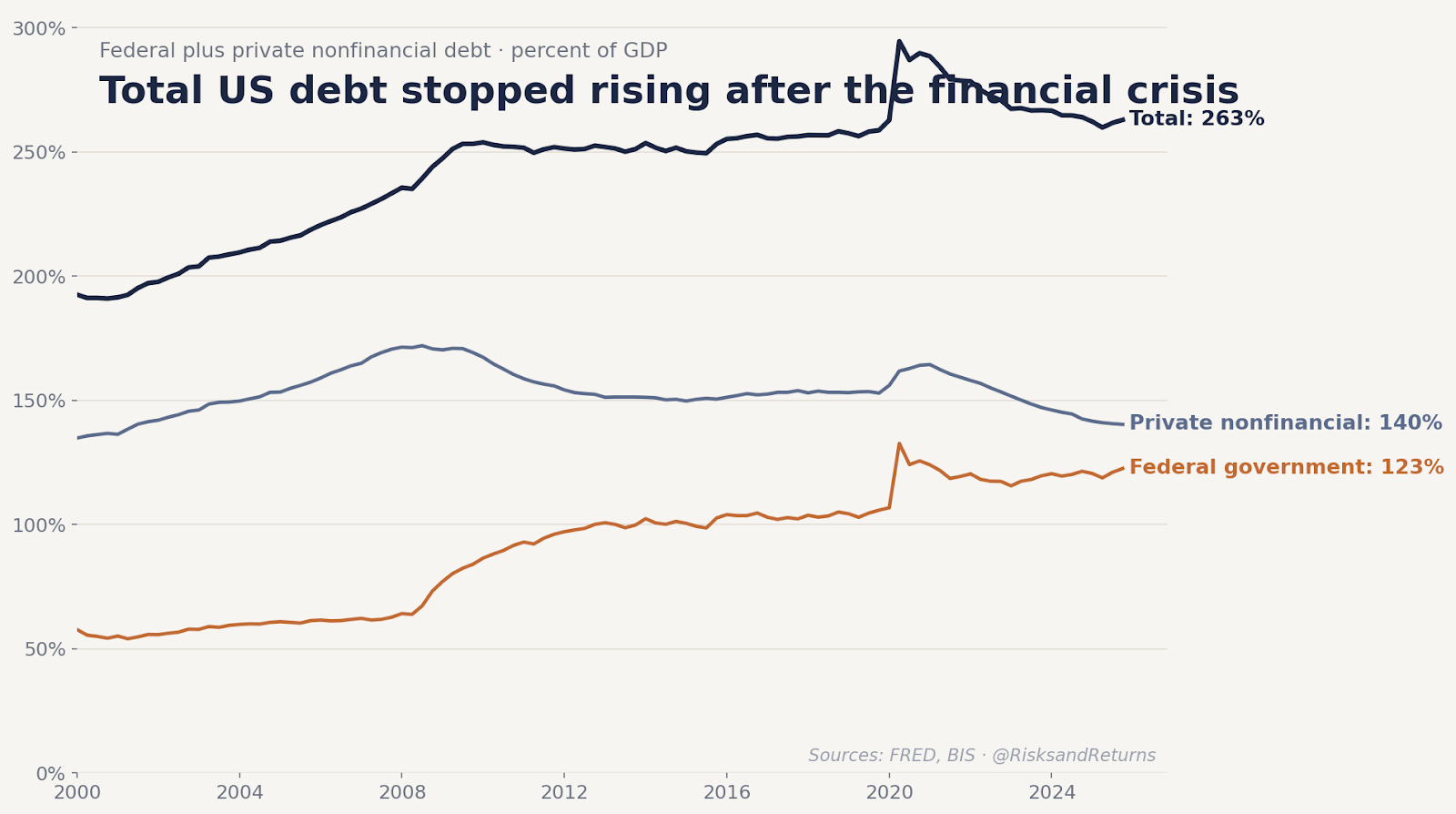
Six: total debt. Add Washington borrowing to private sector debt and the total sits about where it was 15 years ago. Households and companies deleveraged while the government borrowed. The debt scare is a government story, not an economy wide one.
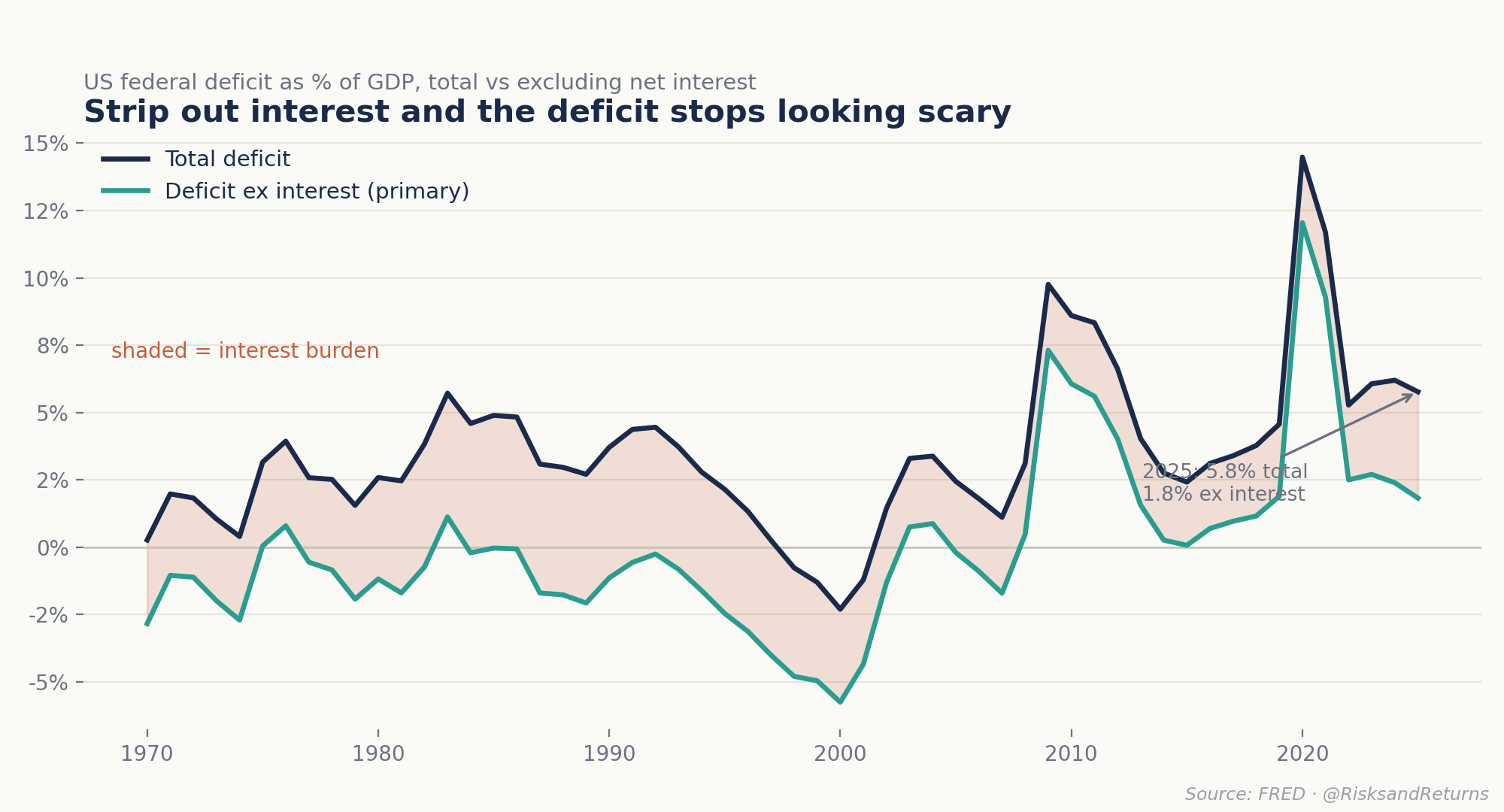
Seven: strip out interest expense and the deficit stops looking apocalyptic. The primary balance is manageable. When growth slows and the Fed cuts, the interest bill comes down with it.
Eight: the Fed has a third mandate that almost nobody mentions: moderate long term interest rates. It will not watch yields rip far and fast without stepping in.
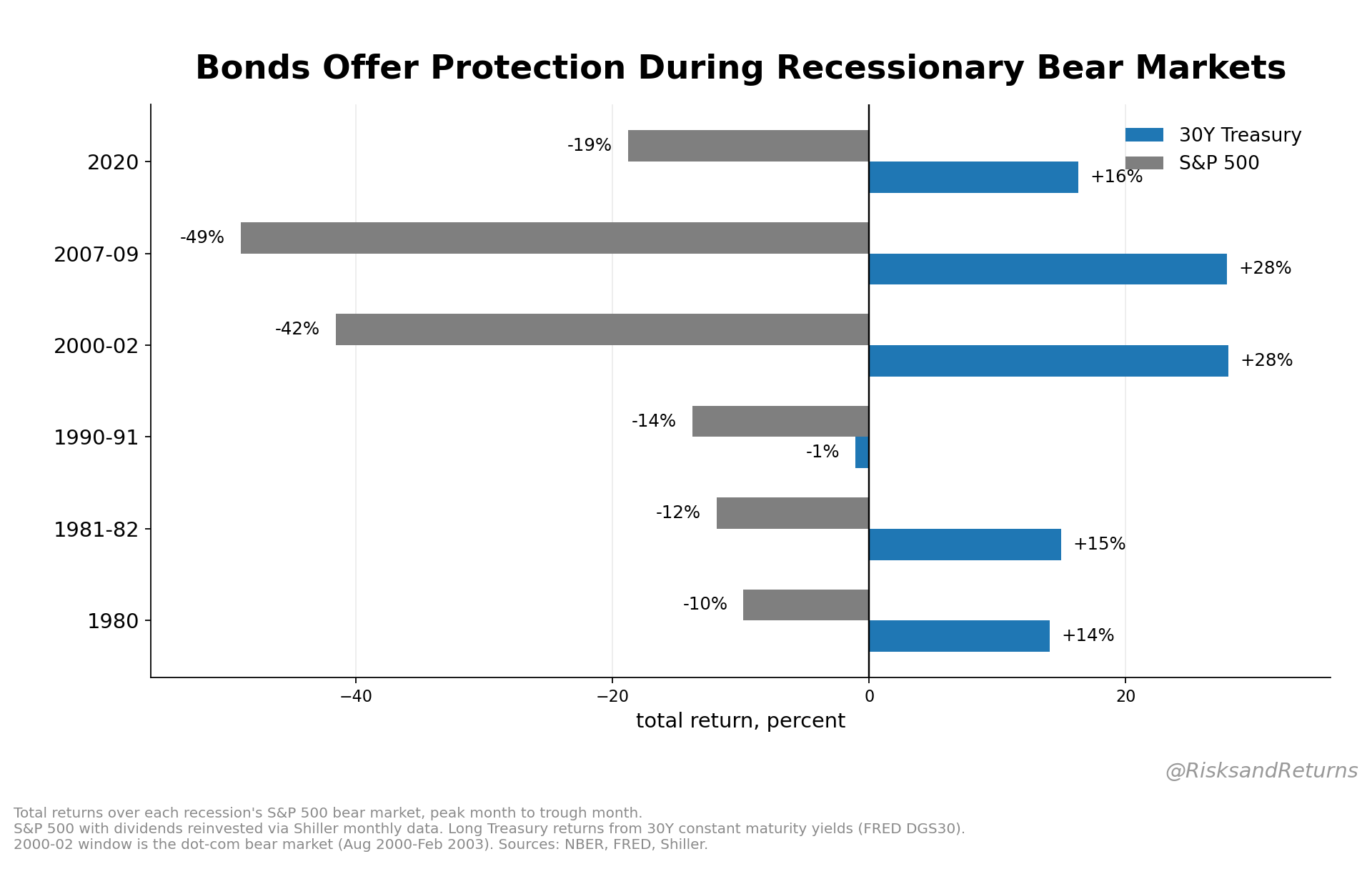
Nine: bonds still do the one job you own them for. In just about every recessionary bear market on record, treasuries went up while stocks went down.
Put it together: generational yields, a fully priced bear case, and a stack of bullish forces almost nobody is talking about. This is the window to build the position.
Then patience.
